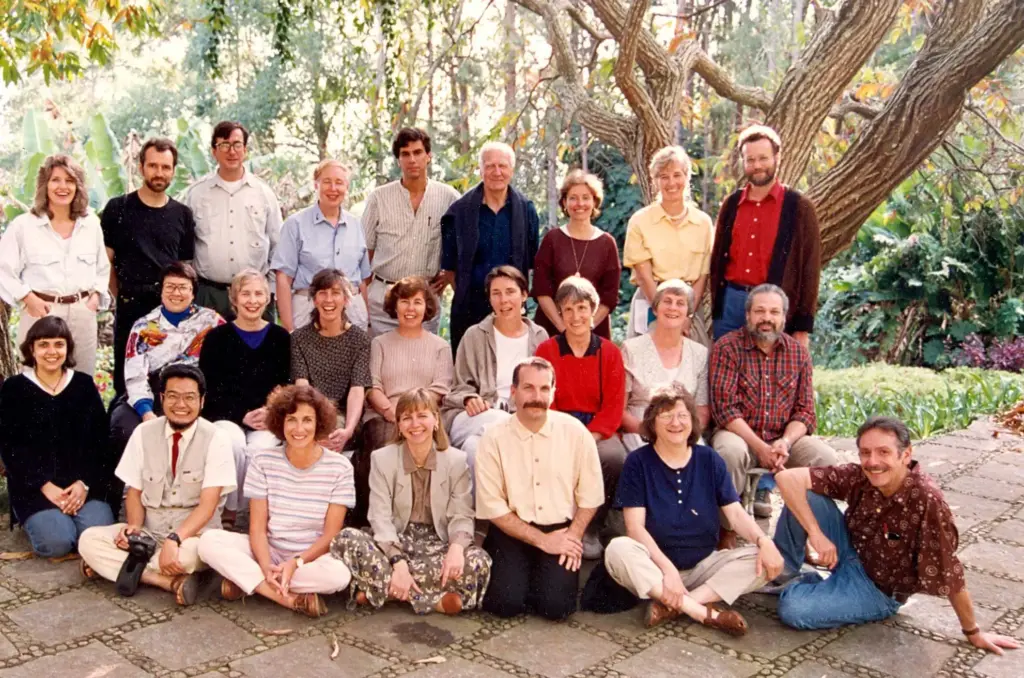
Encontro importante
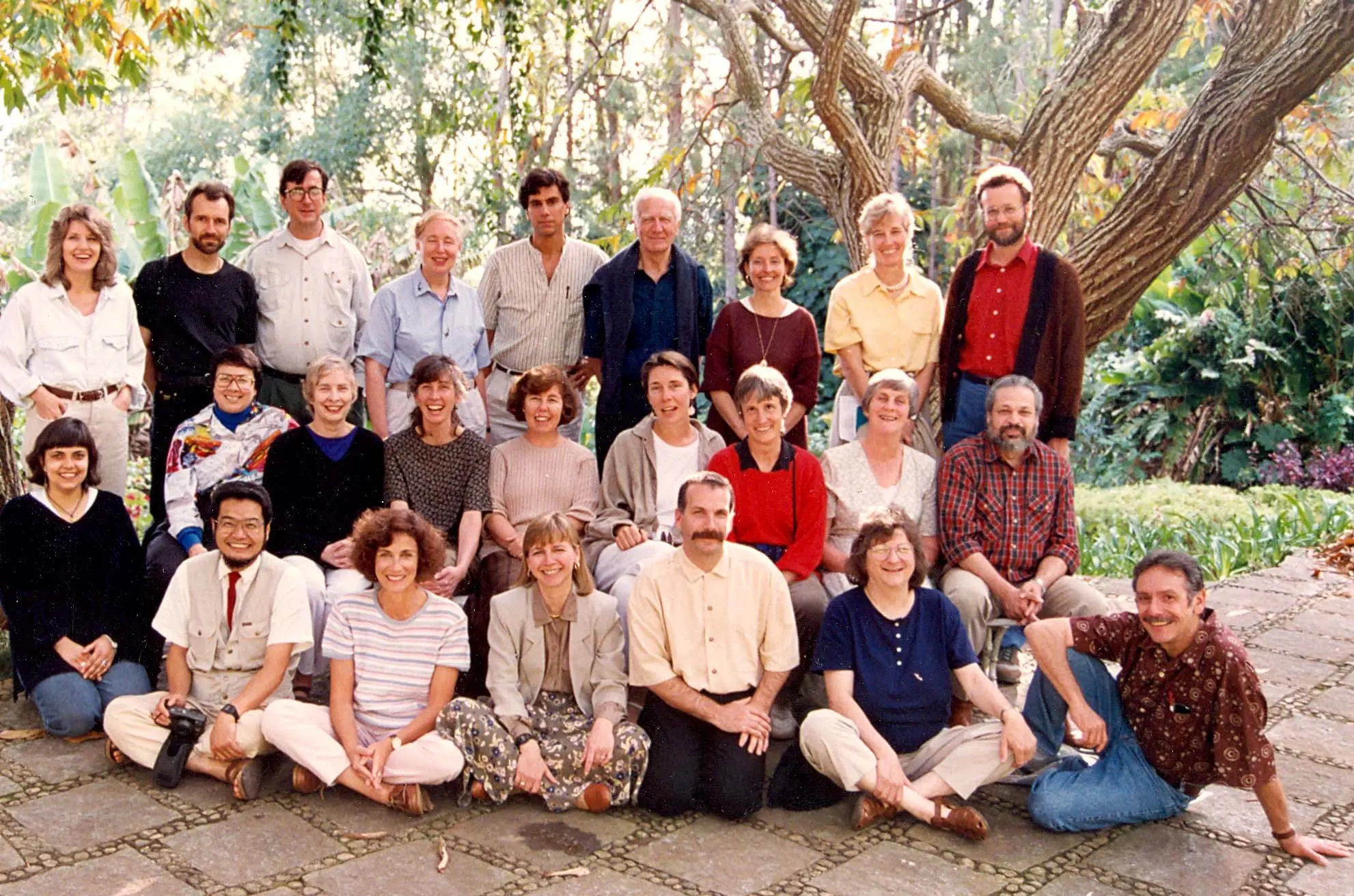
Sentados (frente): H. Takasaki, S. Strum, L. Fedigan, G. Mitman, N. Quinn, S. Glickman. Meio: M. Drogan, Z. Tang-Martinez, S. Silverman, K. Strier, E. Yamamoto, A. Wylie, D. Haraway, T. Rowell, R. Sussman. Em pé: L. Obbink, B. Noble, B. Latour, A. Jolly, C. Stanford, R. Hinde, P. Asquith, S. Hrdy, D. Byrne. Não apareceu na foto: E. Fox Keller
Foto dos(as) participantes do Simpósio “Changing Images of Primate Societies: The Role of Theory, Method and Gender”, organizado por Linda Fedigan e Shirley Strum e realizado pela Wenner-Gren Foundation no Hotel Rosa dos Ventos, em Teresópolis (RJ, Brasil), entre os dias 15 e 23 de junho de 1996. Figuram na foto: Bruno Latour (em pé, terceiro da esquerda para a direita); Donna Haraway (sentada na fila do meio, com blusa vermelha, terceira da direita para a esquerda); e Shirley Strum (sentada no chão, de pernas cruzadas, com calça branca e camiseta listrada, segunda da esquerda para a direita na fila da frente). Também figura na foto o psicólogo Dick Byrne (em pé, com camisa vermelha, primeiro da direita para a esquerda na linha de trás), que famosamente perguntou para Latour, durante esse mesmo simpósio, se ele acreditava na realidade.
A descrição oficial do Simpósio foi:
This symposium was designed to address two claims that have frequently been asserted but never systematically examined: that there have been significant shifts in the interpretation of primate society over the past few decades; and that women scientists have played a major role in bringing about these shifts. The conference employed a comparative and historical framework to bring empirical evidence to bear on these issues. The comparative dimension was provided by considering several disciplines closely related to primatology (anthropology, psychology, and zoology); perspectives from science studies, feminist studies, and popular culture studies; and different national traditions of primate studies. The participants focused on changes in theory, method, and societal concerns, on the role of increasing numbers of women in primatology, and on the interaction of science and society in popular culture and the media, to assess how these different factors have contributed to shifts in understandings of primate society. A broader objective of this symposium was to reflect on how and why scientists in general, and primatologists in particular, develop and change their perceptions of their subject matter. […] Wenner-Gren Symposium #120. (Fonte: https://wennergren.org/symposium-seminar/changing-images-of-primate-societies-the-role-of-theory-method-and-gender/)
A referência de Latour a Byrne é:
“I have a question for you,” he said, taking out of his pocket a crum pled piece of paper on which he had scribbled a few key words. He took a breath: “Do you believe in reality?” […] “But of course!” I laughed. “What a question! Is reality something we have to believe in?” […] He had asked me to meet him for a private discussion in a place I found as bizarre as the question: by the lake near the chalet, in this strange imitation of a Swiss resort located in the tropical mountains of Teresopolis in Brazil. Has reality truly become something people have to believe in, I wondered, the answer to a serious question asked in a hushed and embarrassed tone? Is reality something like God, the topic of a confession reached after a long and intimate discussion? Are there people on earth who don’t believe in reality? (LATOUR, Bruno. 1999. “Do You Believe in Reality?”
Newsfrom the Trenches of the Science Wars. In: Pandora’s hope: essays on the reality of science studies. Cambridge: Harvard University Press, p.1)
E vale também citar a seguinte passagem de Haraway sobre o simpósio:
The most interesting [conversation with primatologists about the book Primate visions] was actually a conference that was organized by Shirley Strum and Linda Fedigan under the auspices of the Wenner Grey Foundation in Brazil a couple of years ago. It was put together specifically to ask how it is that primate science has changed over the century. They invited science studies people, feminist stud ies people, and primatologists and other behavioral ecologists. They had people like Gregg Mitman, who is an historian of biology who does marvelous work on the representation of animals in American culture. Bruno Latour, me, Evelyn Keller, Alison Wiley, who does history of archeology. Primatologists were there from Brazil, Japan, the U.K., Canada, and the U.S. It was a total of about twenty-two people who came for a week. (HARAWAY, Donna. 2000. How like a leaf: an interview with Thyrza N. Goodeve. New York: Routledge, p.57)





 O Laboratório de Sociologia dos Processos de Associação (LaSPA) é sediado no Instituto de Filosofia e Ciências Humanas (